






Welcome to the new NDMU website!

We’re continuing to fine-tune the experience following launch. If you notice any missing content, broken links, please click here.
Thank you for helping us ensure the new website provides the best possible experience.

School of Pharmacy & Health Professions

Occupational Therapy

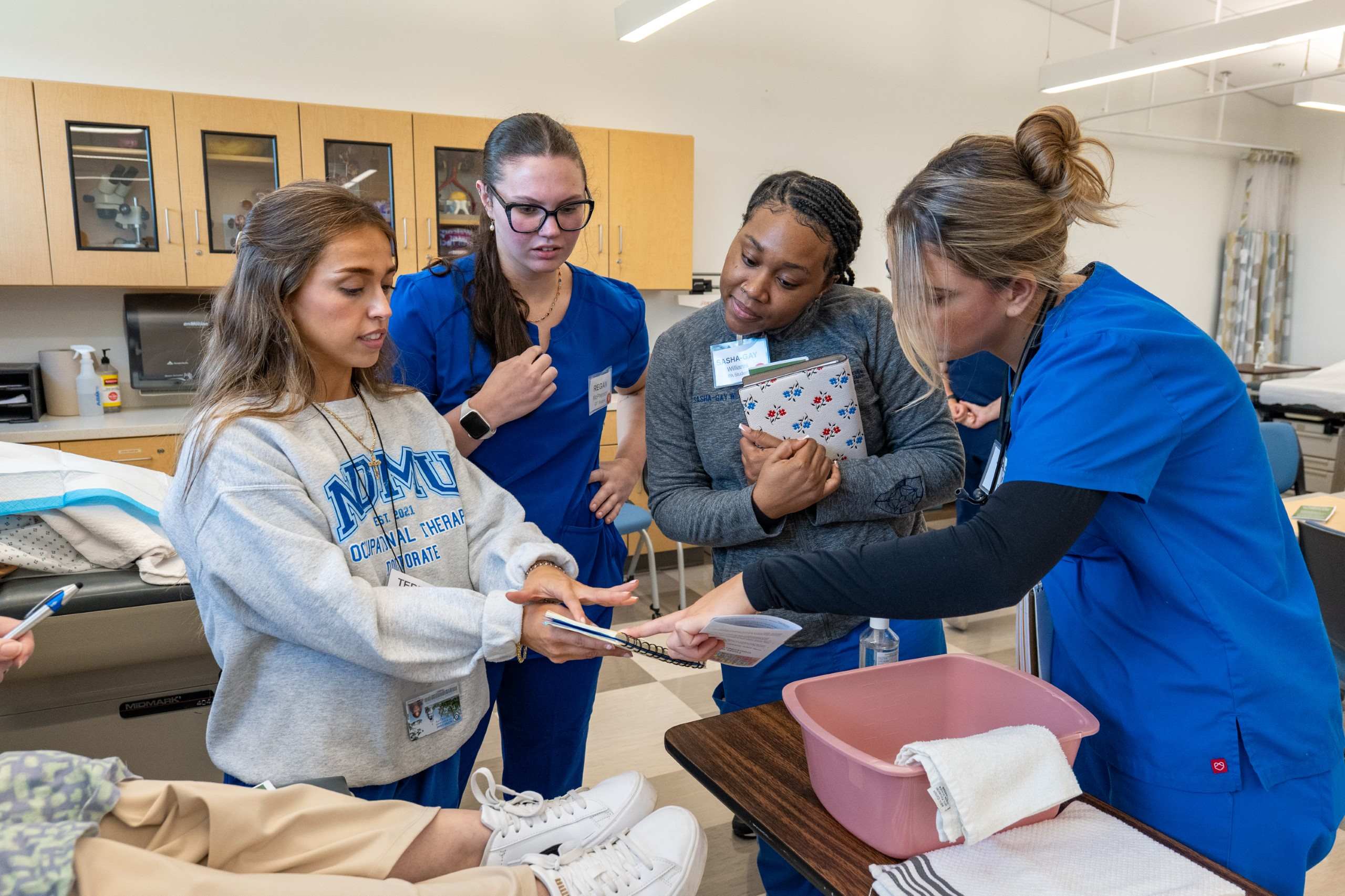
The Occupational Therapy Doctorate at Notre Dame of Maryland University prepares you to support meaningful, engaged lives through an evidence‑based, client‑centered approach. With integrated coursework and fieldwork, you’ll learn to apply theory in practice while working alongside nationally and internationally recognized faculty.

overview

SchoolSchool of Pharmacy & Health Professions
TypeDoctorate
FormatIn-Person
Credits104
LevelGraduate & Professional Studies

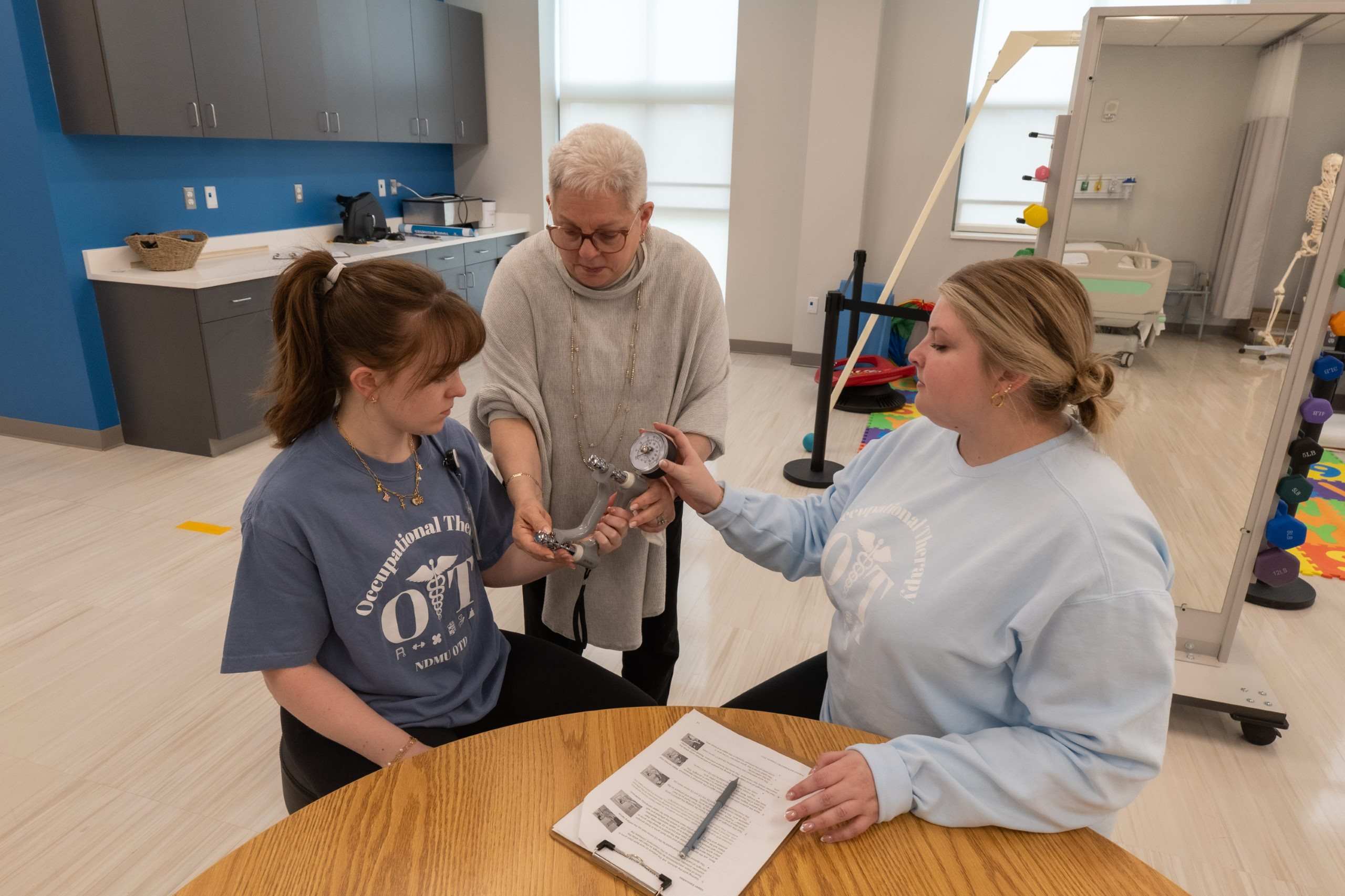
Notre Dame of Maryland University’s Doctor of Occupational Therapy (OTD) program prepares you with the knowledge, skills, and hands‑on experience needed to excel in practice. Through an experiential, occupation‑focused curriculum, you’ll explore physical and mental rehabilitation across the lifespan, interprofessional wellness, population health, and occupational justice. A strong emphasis on research and a capstone experience ensures you graduate as an evidence‑based practitioner ready to lead, innovate, and make a meaningful impact in diverse health care settings.

The Occupational Therapy program focuses on educating a new generation of interdisciplinary transformational leaders and scholars educated to deliver inclusive, equitable, client-centered, evidence-based, culturally competent, distinctive, and sustainable healthcare practices.

faculty & staff

a curriculum built for what's next

Pathway

Fall Semester (15 Semester Hours)
OTD 532 OT Foundational Knowledge & Practice (4)
OTD 534 Neuroscience for Rehabilitation (3)
OTD 536 Population Health and Occ Justice (2)
OTD 537 Research I – Qual and Quant Methods (3)
OTD 538 Healthcare Ethics, Policy and Advocacy (3)

Spring Semester (15.5 Semester Hours)
OTD 542 Immersive I – Mental Health (4)
OTD 543 Cognition Across the Lifespan (2)
OTD 544 Vision Across the Lifespan (2)
OTD 546 Research II – Mix Methods and Stats (3)
OTD 548 Clinical Med and Pharmacology (3)
OTD 549 Interprofessional Healthcare Engagement (1)
OTD 545 Fieldwork Level 1A – Mental Health (.5)

Summer Semester (10.5 Semester Hours)
OTD 551 Immersive II – Physical Rehabilitation (3)
OTD 552 Anatomy and Biomechanics (3)
OTD 553 UE Evaluation and Intervention (2)
OTD 555 Capstone Planning I (1)
OTD 554 Fieldwork Level 1B – Physical Rehab (.5)

Fall Semester (13.5 Semester Hours)
OTD 601 Immersive III – Pediatrics and Youth (5)
OTD 603 Neuro Rehabilitation (3)
OTD 605 Assistive Technology (2)
OTD 608 Capstone Planning II (2)
OTD 611 Fieldwork Level 1C – Pediatrics (.5)

Spring Semester (12.5 Semester Hours)
OTD 621 Leadership and Management (3)
OTD 623   Aging and Wellness (3)
OTD 625 Qualitative Improv Through Translational Sciences (3)
OTD 627 Buss Planning & Development in OT Practice (3)
OTD 628 Capstone Planning III (1)
OTD 612Level 1D Emerging Area (.5)

Summer Semester (9 Semester Hours)
OTD 631 Advanced Practice in OT: Border & Barriers (3)
OTD 633 Instructional Design, Strategies & Delivery Methods (3)
OTD 635 Capstone Planning IV – (2)
OTD 638 Professional Seminar – (2)

Fall Semester (9 Semester Hours)
OTD 642 Capstone Planning V (1)
OTD 650 Level II A Fieldwork (8)

Spring Semester (9 Semester Hours)
OTD 700 Doctoral Experience Prep Seminar (1)
OTD 660 Level II A Fieldwork (8)

Summer Semester (10 Semester Hours)
OTD 721 Capstone Presentation (1)
OTD 720 Doctoral Rotation (9)

The OTD is a three-year, 104-credit, full-time program completed over nine semesters, including summers. The curriculum comprises traditional, hybrid, and fully online courses in a cohort-based model, highlighting the importance of hands-on applications and training. Across the curriculum, students benefit from Level I and Level II clinical experiences. The OTD program culminates in a Scholarly Project Implementation Experience (SPIE), incorporating a 14-week student-designed research project and public presentation to facilitate, promote, and sustain research agendas and evidence-based occupational therapy practices.

Upon completing all the didactic, clinical, and research requirements in the OTD program, you will be eligible to sit for the National Board for Certification in Occupational Therapy (NBCOT) exam. After successful board certification, you will be eligible to apply for licensure in the state(s) you seek to practice.

Please review the How to Apply section for any information regarding how to apply to the NDMU-OTD program.

Opportunities for clinical experiences are built into the curriculum to provide gradually increased levels of responsibility and experience in occupational therapy settings under the guidance and supervision of a qualified occupational therapist.

  • Level I Fieldwork provides an introductory experience where you can become more comfortable with client needs in a supervised setting. It helps to enrich didactic coursework by seeing firsthand the concepts discussed in class. It also provides an opportunity to explore different practice settings. At NDMU, level I fieldwork includes placements related to physical dysfunction; mental health; pediatrics; and education, wellness, community, and emerging trends.
  • Level II Fieldwork provides more in-depth experiences working directly with clients to enhance your skills as a practitioner. The NDMU curriculum includes two full-time placements.

The capstone is the culmination of your OTD studies and is comprised of (8) courses:

  • Capstone Planning, I, II, III, IV, and V
  • Doctoral Experiential Seminar
  • Doctoral Rotation
  • Capstone Presentation

Planning for the doctoral capstone requires collaboration with faculty and a mentor to prepare for the experience. You will develop in-depth skills in areas such as practice, research, administration, leadership, sustainable development and health, policy and advocacy, education, and theory development.

The onsite Doctoral Capstone Rotation occurs over a minimum of 14 weeks full-time and a minimum of 32 hours per week. The onsite capstone experience occurs under the supervision of a mentor, who may or may not be an occupational therapist depending on the expertise needed to provide appropriate direction.

Apply Today!

Submit your application via OTCAS.

Admissions Information

The NDMU Occupational Therapy Doctorate program starts a new cohort each fall. Applicants may apply for the next cohort through the Occupational Therapist Centralized Application Service (OTCAS), or directly through our website at no cost.

Standard Deadline
The standard deadline to submit a completed application is May 15. Applications received after the May 15 deadline may be considered for admission if space is available and would be placed on a wait list.

Apply on OTCAS

Apply through NDMU – no application fee!

Admission into the OTD program at NDMU is competitive. Students are considered for admission with the following:

  • Bachelor’s degree – minimum 3.0 cumulative GPA (4.0 scale)
  • Completion of prerequisite courses
  • 3 letters of recommendation
  • Human service observation hours
  • Personal statement
  • Resume
  • Interview

Note: All observational hours need to be completed within the past two years.

Completion of the following prerequisite courses within the past 5 years with a minimum cumulative grade point average of B (3.0 based on 4.0) is required for admission into the OTD program. Transcripts of bachelor’s degree and completed prerequisite courses must be submitted. Courses may be taken online or in person from an accredited institution.

NOTE: Students may have a maximum of 2 prerequisite courses with a grade of C (as long as their cumulative grade point average is 3.0 across all prerequisites).

Required Courses & Credits

  • Human Anatomy & Physiology I Course and Lab (4)
  • Human Anatomy & Physiology II Course and Lab (4)
  • College Writing (3)
  • Basic Statistics (3)
  • Introductory Psychology (3)
  • Psychopathology OR Abnormal Psychology (3)
  • Human Growth & Development or Developmental Psychology Across Life Span (3)
  • Introductory Sociology (3)
  • Medical Terminology (3)
  • Neuroscience or Cognitive Psychology or Brain and Behavior (3)

Total Credits: 32

NOTE: Advanced Placement (AP) credits are not accepted as fulfillment of prerequisite courses. Course credits from other occupational therapy programs are not accepted.

Provide three letters of recommendation, from individuals who have taught the applicant in an academic setting. Letters of recommendation should address academic, professional and personal attributes, and potential for successful graduate education.

Applicants are required to complete thirty (30) hours of observation. Three practice areas and settings are required, one with 10 hours and two with 10 hours each. All observational hours need to be completed within the past three years.

  • Ten (10) hours in the practice area that you intend to pursue after graduation and must be done under the direction of an Occupational therapist.
  • One additional observation must be done with an OTR.
  • The third observation may come from work experience where you worked with populations with a disability, including geriatrics, pediatrics, day camps, mental/behavioral health, etc., for example.

NOTE: Your essay should be reflective of your insights and experiences gained from these observations. All hours must be completed prior to admission into the program.

A personal statement should cover your interest in occupational therapy with emphasis on the practice area that you intend to pursue after graduation, insights gained from the observations, your strengths, professional skills, personal attributes, and how these experiences have helped to shape your desire to become an occupational therapist. Required length is a minimum of 500 words to a maximum of 750 words.

Program Competencies

Success in both the online and in-person portions of the program requires students to have the ability to navigate the institution’s learning management system (Canvas), manage electronic communications (email), utilize research and information databases, and install software. Online courses will consist of a combination of scheduled synchronous and asynchronous learning activities; synchronous sessions will require use of the Zoom platform.  In-person courses will maximize the use of technology with no seat-time reduction, using the Canvas learning management system for administration, communication, assessment and content delivery to both supplement and enhance the face-to-face experience. Prior to starting coursework, all students will be required to complete an online orientation course through Canvas that will prepare them to meet the technology competency requirements of the online portions of the program.  Additionally, students will have ongoing access to the IT service desk to assist with managing questions or concerns related to required technologies while in the program.

Windows Desktop/Laptop

  • Operating (OS): Latest 64-bit OS
  • Processor: Intel Core i7 or Ryzen 5/7/9
  • RAM or Memory: 8GB
  • Hard Drive: 120GB/250GB Solid State or Flash drive
  • Web Cam and Microphone: Yes
  • Graphics Card: Intel Graphics
  • Warranty: Recommended
  • High Speed Internet: Yes

MacDesktop/Laptop

  • Operating (OS): Latest OS
  • Processor: Intel Core i7 or Ryzen 5/7/9
  • RAM or Memory: 8GB
  • Hard Drive: 120GB/250GB Solid State or Flash drive
  • Web Cam and Microphone: Yes
  • Graphics Card: Intel Graphics
  • Warranty: Recommended
  • High Speed Internet: Yes

Tablet, Macbook Air, and Hybrid devices are not recommended for production and computing

How It Works

apply for:

1

Application

Submit your application via OTCAS.

2

Transcripts

Submit your official transcripts on OTCAS.

Instructions

3

Required Materials

  • Three or more letters of recommendation
  • Personal statement
    • A personal statement should cover your interest in occupational therapy with emphasis on the practice area that you intend to pursue after graduation, insights gained from the observations, your strengths, professional skills, personal attributes, and how these experiences have helped to shape your desire to become an occupational therapist. Required length is a minimum of 500 words to a maximum of 750 words.
  • A minimum of 30 hours of human service observation hours
  • Resume
1

Application

Submit Your Application via the NDMU application.

2

Transcripts

Submit your official transcripts from all previous institutions.

Read instructions on the school website to send your transcripts to NDMU processing@ndm.edu

3

Additional Materials

Submit the following via your pURL page

  • Three or more letters of recommendation
  • Human service observation hours
  • Personal statement
  • Resume

OTD Student Story

“It’s not too common for occupational therapists to create their own companies, but we’re well-equipped to do so,” Elick said. “I think it’s a great way to not only advocate for the profession, but also advocate for the communities that we serve if we increase our accessibility. That’s what this class introduced us to.”

Read Their Story

Accreditation

The entry-level occupational therapy doctoral degree program at Notre Dame University is accredited by the Accreditation Council for Occupational Therapy Education (ACOTE) of the American Occupational Therapy Association (AOTA), located at 7501 Wisconsin Avenue, Suite 510E, Bethesda, MD 20814. ACOTE’s telephone number c/o AOTA is (301) 652-AOTA and its web address is www.acoteonline.org. Graduates of the program will be eligible to sit for the national certification examination for the occupational therapist administered by the National Board for Certification in Occupational Therapy (NBCOT). After successful completion of this exam, the individual will be an Occupational Therapist, Registered (OTR). In addition, all states require licensure to practice; however, state licenses are usually based on the results of the NBCOT Certification Examination. A felony conviction may affect a graduate’s ability to sit for the NBCOT certification examination or attain state licensure.

Students must complete 24 weeks of Level II fieldwork as well as an individual 14-week capstone experience within 12 months following the completion of the didactic portion of the program. The doctoral capstone experience must be started after completion of all coursework and Level II fieldwork as well as completion of preparatory activities defined in 2018 ACOTE OTD Standard D.1.3.

Goals & Outcomes

Students who graduate from the Notre Dame of Maryland Occupational Therapy Program will be able to:

  1. Demonstrate foundational knowledge about established and evolving biopsychosocial and medical sciences and their applications to individuals’ and populations’ care.
  2. Demonstrate an investigative and analytic thinking approach to clinical situations
  3. Accurately formulate and develop client-centered treatment plans.
  4. Obtain an accurate occupation-based history and perform a comprehensive occupational therapy assessment.
  5. Demonstrate an understanding of how practice decisions regarding resource allocation impact health organizations’ finances, while safeguarding the practice of cost-effective health care that does not compromise the quality of care.
  6. Provide practical, equitable, understandable, and respectful quality care and services responsive to diverse cultural health beliefs, and practices, preferred languages, health literacy, and other communication needs, adhering to the culturally and linguistically appropriate services (CLAS) standards.
  7. Understands, accesses, uses and evaluates the effectiveness of resource providers and systems to extend equitable occupational therapy services.
  8. Demonstrate an awareness of and responsiveness to the more extensive healthcare system to provide patient care that balances quality and cost while maintaining the person’s sense of agency
  9. Develop an interdisciplinary advocacy plan for effective health policy changes to facilitate health and social equity.
  10. Contribute to creating, disseminating, applying, and translating new healthcare knowledge and practices in an interprofessional team

NBCOT Certification Exam Results

Program results from the National Board for Certification in Occupational Therapy (NBCOT) can be found online at https://www.nbcot.org/Educators-Folder/SchoolPerformance

Graduation Rates

Students Graduating on Time (August): 3

Students Delayed by one semester (December): 1

Graduation Rate: 100%

Students Graduating on Time (August): 2

Students Delayed by one semester (December): 0

Graduation Rate: 100%

Request more information today!

Cost of Attendance

The charts below contain estimates of direct costs for AY2023-24 for Maryland residents and out-of-state students for the Doctorate in Occupational Therapy program. Students should consult the University’s Business Office webpage for the most up-to-date tuition and fee rates.

Cost Estimate: Maryland Residents

Year 1 Year 2 Year 3 Program Total
Tuition $29,000 $29,000 $29,000 $87,000
Maryland Resident Scholarship* ($10,000) ($10,000) ($10,000) ($30,000)
Fees $1,000 $1,000 $1,000 $3,000
Total $20,000 $20,000 $20,000 $60,000


* Beginning for AY2023-24, new applicants who are Maryland State residents at the time of application will automatically receive a $10,000 “Maryland Resident Scholarship” per year to help offset the cost of tuition for Maryland students.

Cost Estimate: Out-of-State Residents

Year 1 Year 2 Year 3 Program Total
Tuition $29,000 $29,000 $29,000 $87,000
Fees $1,000 $1,000 $1,000 $3,000
Total $30,000 $30,000 $30,000 $90,000


Estimates do not include other direct or indirect costs which may include but are not limited to: room and board, transportation costs, personal expenses, health insurance, background checks, etc.

The program total cost estimates above do not include annual tuition and fees increases. Tuition and fee rates are determined annually year by the Board of Trustees, and are subject to change.

Transfer Credit / Waiver Policy

Advanced Placement (AP) and experiential learning credits are not accepted toward prerequisite coursework, and course credits from other occupational therapy programs cannot be transferred. No prior work experience is required for entry into the program.

Regarding prerequisite requirements for admission, the chair of the occupational therapy program has the authority to substitute a course if such substituted course is deemed to cover similar material satisfactorily.

Student Classifications

Candidates who fulfill the admission requirements are accepted only as full-time degree-seeking students; there are no part-time pathways available for completion.

Health Clearance

In addition to meeting the immunization requirements of the University, students entering the Occupational Therapy Doctorate Program must also satisfy more specific health and immunization requirements prior to participation in any fieldwork experience. These include completion of CPR certification with First Aid and AED training for both Adults and Children/Infants.

All students admitted to the Occupational Therapy Doctorate Program are required to submit a certificate of complete physical examination that indicates the student can complete the educational program, including clinical rotations and capstone no later than four weeks prior to matriculation.

Health Insurance

All students are required to have and provide proof of health insurance when entering the program and again prior to each clinical experience.  Students are not covered under Workman’s Compensation or any other policy by Notre Dame of Maryland University or by any of our affiliated clinical sites.

Requirements for Completion

The minimum requirements for program length and quality standards for the OTD graduate degree program at Notre Dame of Maryland University is described below. Requirements for graduate degree programs may be refined from time to time as determined by the University in its academic judgment. Even after the requirements for a degree have been fulfilled, each student must complete the degree application to graduate. The “Apply to Graduate” option is found within the university portal. No degree can be processed unless the degree application is completed.

Successful completion of 124 weeks and 104 credits signal the minimum requirement for the awarding of the NDMU-OTD degree.

All occupational therapy doctoral graduate students must successfully complete the 104 credits of the NDMU-OTD program curriculum within five years from the date of matriculation in order to be eligible for graduation; this includes successful completion of all Level I and Level II fieldwork rotations, their doctoral capstone project and final capstone presentation. In addition, occupational therapy graduate students are required to maintain a minimum GPA of 3.0 or greater to receive an OTD degree.

Enrollment Status and Normal Study Load

Full-time status as a graduate student at Notre Dame of Maryland University is defined as a minimum enrollment of 13.5 to 15 semester hours during the Fall and Spring semesters, and 9 to 10.5 semester hours during the Summer semesters.

Progression

Students are promoted from one semester to the next, from the didactic to the clinical semester, and graduated based on performance related to both academic progress and ability to maintain Essential Functions and Professional Behavioral Expectations (outlined in the OTD Student Handbook).

Probation

A student who fails to meet academic, behavioral objectives, and/or essential function expectations may be placed on academic and/or behavioral probation. A student earning a grade less than a B- in any course will be placed on academic probation. A student who fails a Level II fieldwork rotation will be placed on probation and required to repeat the rotation, which may be prior to advancing to taking any other courses in the program. This may result in the student waiting up to one full year before being able to repeat the failed rotation and subsequently resuming his/her program. A student who receives a score of 23 or below on the professional behavior rubric will be placed on behavioral probation for a minimum of one semester. Students on academic or behavioral probation may not be allowed to progress to level II fieldwork until completing specific remediation related to academic or professional behavior concerns.

Remediation Policy

Occupational Therapy faculty affirm the importance of using programmatic and in-course remedial interventions to provide students with the opportunity to improve and demonstrate their competency of course content such that the students may progress through the curriculum. For the remediation process and outcome to be successful, students are expected to proactively seek help, utilize all available resources, take responsibility for their learning, and fully commit to successfully completing the remediation.

Within-Course Remedial Interventions are administered during the course to improve student’s knowledge, skills, or application of course material, to avoid a course failure. All students are eligible for and required to complete within-course remedial interventions.

End-of-Course Remediation: An opportunity for end-of-course remediation will be provided to any student who is at risk of earning a B- or a C grade in a course if they meet the criteria below and approved by the Promotion and Graduation Committee. As part of the Committee’s decision-making process, the course coordinator will be asked to provide a recommendation as to the students’ eligibility.

Failure to demonstrate competency in any assessment or assignment deemed critical for successfully completing or passing the course

Participation in and completion of within-course remedial interventions

Completion of all assigned work within the course

Earning a pending final grade of a B- or C.

Limits to eligibility: Students may not be allowed to take an end-of-course remediation in situations including but not limited to:

  • Attempting to use end-of-course remediation when course failure is due to
    • academic dishonesty
    • Student conduct violation
  • Violation of any other University or School codes, regulations, or policies

The Individual Remediation Plan is developed for a student who is at risk of earning a grade lower than B- in a course as determined by the course coordinator. The remediation plan addresses and incorporates documented student deficiencies so that the student can successfully remediate the course and progress. The remediation plan is developed by course faculty and approved by the Promotion and Graduation Committee.

Students who successfully complete end-of-course remediation will have a grade of B submitted to the Registrar and recorded on the transcript.

Students who fail end-of-course remediation will have a grade of F submitted to the Registrar and recorded on the transcript. Students will repeat the course as per their progression policies.

Deceleration

A student who fails to meet academic, behavioral objectives, and/or essential function expectations while on academic or behavioral probation may be decelerated by the Academic Committee for repetition of a course, or other remediation as indicated for specific issues. If a student who is decelerated for any reason must register for fewer credits in a given semester than is otherwise required for the cohort, the student will be charged the current credit-hour rate that is stated in the Graduate Fee Schedule of the University catalog for “Occupational Therapy Program.” Deceleration of any kind will result in a delay of a student’s official graduation date.

Dismissal

The following may result in dismissal from the program:

  • A student who receives two courses graded with less than a B- during the didactic years or one course graded with an F according to the program’s grading scale will be at risk for dismissal from the program.
  • If a student is on academic or behavioral probation from the didactic year, failing a single fieldwork rotation may result in dismissal from the program.
  • A second failed Level II fieldwork will result in dismissal from the program.
  • A failure to complete the capstone project and presentation will result in dismissal from the program.

Withdrawal or Leave of Absence

For personal or medical reasons, a student may voluntarily discontinue enrollment at the University by requesting either a leave of absence (temporary) or a withdrawal from the University (permanent).

A leave of absence is a temporary hiatus from the University with the intent to return after a specified period. Students requesting a leave of absence must indicate when they plan to return to their studies. The total time away from the University cannot exceed two consecutive semesters. A student may not take matriculated coursework at another institution while on a leave of absence. To be eligible to return from a leave of absence, the student must demonstrate readiness to return by satisfying all requirements for return. If a student does not return from a leave of absence at the scheduled time, the student will be administratively withdrawn from the University and must apply for readmission.

A withdrawal is a permanent separation from the University. A student who has withdrawn must apply for readmission to the University if the student wishes to re-enroll. Students withdrawing from School of Pharmacy and Health Sciences graduate programs will be contacted by the Dean or designated administrator for a brief exit interview.

A student may request a personal or medical leave of absence or a withdrawal by completing the Leave of Absence/Withdrawal Form available through their department. A student requesting a leave of absence or withdrawal will meet with the program director to discuss the academic and financial implications of their decision. The designated program official will also discuss the requirements for return if a student is taking a leave of absence. Leave of Absence & Return of Title IV Funds | Notre Dame of Maryland University

If the request for a personal or medical leave of absence/withdrawal is approved for a future semester, then the student may remain enrolled in and receive grades for the current semester. The student will have a hold on future registration until the conditions of return have been met.

If the request for a personal or medical leave of absence/withdrawal is approved for a current semester, then depending on the academic calendar and personal circumstance the program director/chair can determine the most appropriate resolution for the student’s enrollment. The student may not take a leave of absence and remain enrolled in the student’s coursework if the leave of absence is for the current semester.

The University may require a student to take a medical leave of absence or withdrawal if, in the judgment of the University, the student poses an imminent threat to the lives, safety or well-being of themselves or other members of the university community (including preceptor and internship settings).

In cases of both medical leaves of absence and withdrawals, the tuition refund policies specified in the Notre Dame of Maryland University Catalog apply. Leave of Absence & Return of Title IV Funds | Notre Dame of Maryland University

Grievance Policy

For cases in which a student feels they have been given an unjustifiably low grade, the following grievance procedure for grades has been established:

  • Within 30 days following the date of issuance of the grade (the date on which grades are due at the registrar’s office or, in the case of incomplete, the date on which the “I” is removed), the student shall inform the professor of their dissatisfaction and arrange a meeting to discuss the grade in question. At this meeting, the professor will provide the student with their final examination paper if it is relevant to the question.
  • If the grade decision is not satisfactorily resolved at this meeting, the student may seek the intervention of the professor’s department chair. The chair shall discuss the grievance with both the student and the professor (either individually or together) and shall make a recommendation to the student and the professor as to the disposition of the grade. If the department chair is the professor, the senior member of the department other than the course instructor shall hear the appeal.
  • If the grievance has not been resolved in steps one or two above, the student may appeal to the appropriate dean. In this case, the student and the professor shall submit in writing their positions on the matter. The appropriate dean may request a written recommendation from the department chair. (These documents are not intended to preclude meetings between the academic dean and the student, the professor and/or the department chair.) The appropriate dean shall then forward a written recommendation to the student, the professor, and the department chair. Within 15 days, the professor shall give written notice to the student of the final disposition of the grade with copies to the appropriate dean and the department chair.
  • The student may appeal the decision of step three (above) to the academic vice president.

Formal Academic Grievances Against Professors, Classes, or Programs

Formal academic complaints about a class or professor should be taken directly to the professor concerned first. If the issue is not resolved, a written complaint should be filed with the appropriate department chair or director. This written version should identify the complainant, specifically detail the perceived problem, the date of the meeting with the Professor and be accompanied by any relevant supporting documentation or data. It should also include the proposed response or remedy.

The department chair/director shall discuss the grievance with both the student and the professor (either individually or together) and shall make a recommendation to the student and the professor as to a resolution.  If the department chair or director is the professor, the senior member of the department other than the course instructor shall hear the appeal.

If the problem has not been resolved in steps one or two above, the student may appeal to the appropriate dean. In this case, the student and the professor shall submit in writing their positions in the matter. The appropriate dean may also request a written recommendation from the department chair or director. (These documents are not intended to preclude meetings between the academic dean and the student, the professor and/or the department chair or director.)

The appropriate dean shall then forward written recommendation to the student, the professor, and the department chair.

The student may appeal the dean’s decision to the academic vice president within 15 days.

Formal academic complaints about a program should be filed with the appropriate department chair or director and then proceed to resolution through the same steps outlined above for complaints about professors or courses.

Additionally, complaints against the Notre Dame of Maryland University, Occupational Therapy Program may be submitted directly to the Accreditation Council for Occupational Therapy Education (ACOTE). To receive formal consideration, all complaints must be submitted in writing to the ACOTE Chairperson, c/o the AOTA Accreditation Department. The complaint must be submitted as an attachment to an email addressed to accred@aota.org and must include a signed complaint form, “Complaint Against a Program Subject to ACOTE Accreditation”. The Accreditation department will acknowledge the complaint within one week of receipt of the complaint. A complaint against an educational program must: a. describe the nature of the complaint and the related accreditation Standards or accreditation policies or procedures that the complainant believes are not being met by the program, including any evidence or documents that might substantiate the complaint; b. provide documentation that the complainant has followed the academic program’s complaint or grievance policy and made reasonable efforts to resolve the complaint, or, alternatively, information that demonstrates such efforts would be unavailing; and, c. be signed by the complainant.

NOTE: The confidentiality of the complaining party is protected by AOTA Accreditation staff unless release of identity has been authorized, or disclosure is required by legal action.