Answering the Call: Faculty Member Appointed to Vatican Evangelization Initiative
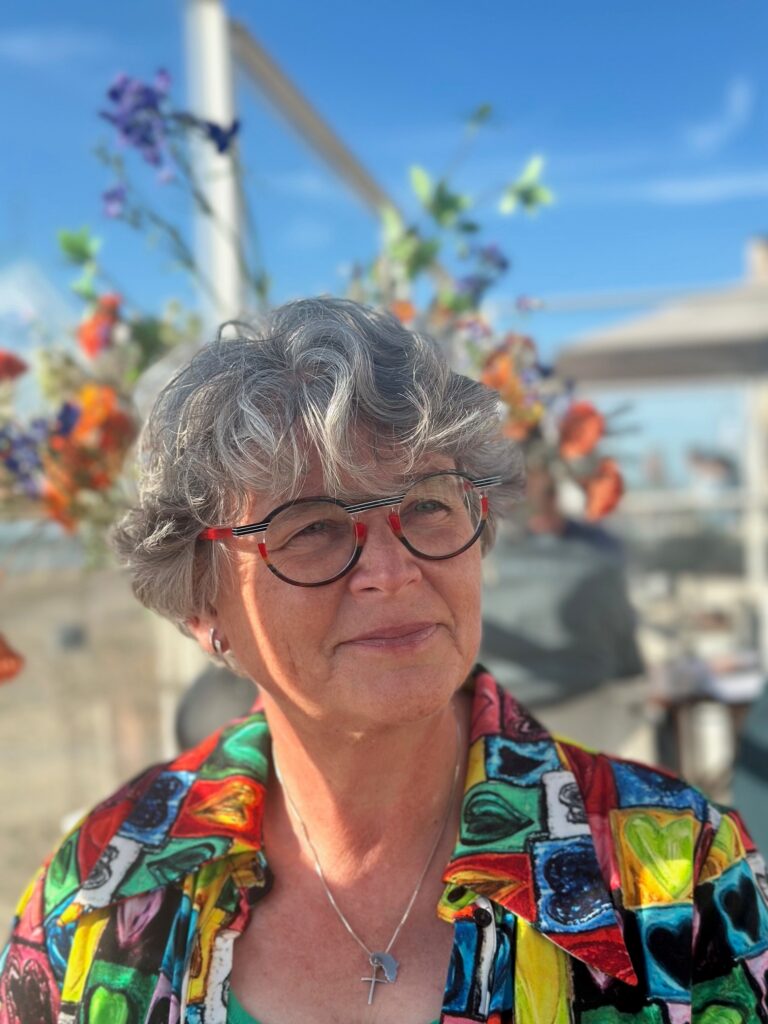
Faculty Spotlight: Dr. Theodora “Dorris” van Gaal, School of Arts, Sciences & Business
BALTIMORE, Md. – When Dr. Theodora “Dorris” van Gaal first presented her doctoral research at a conference in Toronto in 2018, she could not have anticipated it would lead to a role within the Vatican. Now, as an assistant professor in Notre Dame of Maryland University’s Department of Religious Studies, she reflects on the events that led to her ecclesial appointment.
Dr. van Gaal’s dissertation explored “migrant spirituality,” examining the experiences of African migrants to the United States through a theological lens—an area she says has long been overlooked. That conference presentation sparked a connection with international scholars, deepening her engagement with global theological conversations through conferences in Africa, participation in the Pan-African Catholic Theology and Pastoral Network, and collaboration with scholars across continents. It ultimately led to her selection as a contributor to Gift Exchange: The Church of the Sheaves, a project within the Dicastery for Evangelization, a central Vatican office established by Pope Francis to advance the Church’s global mission. The project focuses on preparing Church leaders for ministry in an increasingly intercultural world.
Learn more about Dr. van Gaal’s work with the Vatican and how she uses the experience to inspire her students:
How did your background prepare you for this role?
My great-aunts served as missionary sisters in Indonesia, and their commitment to education and healthcare left a lasting impression on me. I initially hoped to follow a similar path in Asia, but an internship in Africa changed my direction entirely. I fell in love with the continent and its people, and that’s where my focus on African theology began. Today my work spans Europe, Africa, and North America, shaped by years of teaching, research, and ministry in intercultural settings — particularly among migrant communities. That experience of living and working across cultures is central to what I bring to this role.
What does your work within the Dicastery for Evangelization involve?
I’m contributing to a major, multi-year project called Gift Exchange: The Church of Sheaves, which is focused on rethinking how the Church forms its leaders around the world. The project centers on developing a predominantly online formation program designed for clergy, religious, and lay leaders — including catechists, educators, and pastoral ministers. It spans approximately three years and focuses on building intercultural competence in evangelization and pastoral care, which is an increasingly urgent need as Catholic communities become more diverse worldwide. The program will include 14 modules that explore foundational theological concepts, diverse theological perspectives and practical applications for pastoral ministry.
I’m the designated leader for one of the module teams. As part of the development process, we are meeting in Rome, and each team will present its plans for lessons, lectures, and videos highlighting successful intercultural pastoral practices. The teams will then receive feedback, identify areas of overlap and gaps in content, and work toward creating a cohesive training program.
Why is intercultural formation so urgent right now?
The universality of the Church has become a local reality. Even in places that once felt culturally uniform, communities are now deeply diverse — and many leaders have not been trained for that. A central theme of this program challenges a common misconception: unity does not mean uniformity. If the Church is truly universal, then it must also be pluriform. It’s not supposed to look the same everywhere — it’s meant to reflect different cultures and contexts.
How does this connect to engaging younger generations and your students at NDMU?
In many parts of the world, young people are very engaged in their faith. The challenge we see in North America and parts of Europe is not universal. For me, the issue isn’t lack of interest, it’s lack of meaningful connection. Young people are seeking participation, not passivity. They don’t want to just sit and listen; they want to help shape it. I’ve seen models of ministry where young people actively contributed to liturgy — selecting music, writing prayers, reflecting on scripture in ways that connected to their lives. When they have ownership, it becomes meaningful. That’s really part of the same challenge as intercultural competence; we have to build connections across cultures and across generations.
What role do you see universities playing in this initiative?
Universities are key partners — integrating this program into theology curricula, offering certificate opportunities, and connecting students with hands-on ministry experiences. If we are preparing leaders for a global Church, this kind of formation is not optional. It’s necessary.
Established in 1895, Notre Dame of Maryland University (NDMU) is a private, Catholic institution in Baltimore, Maryland, with the mission to educate leaders to transform the world. Notre Dame has been named one of the best “Regional Universities North” by U.S. News & World Report.
related news