Nikeea Copeland Linder
Associate Professor/Chair
Biography
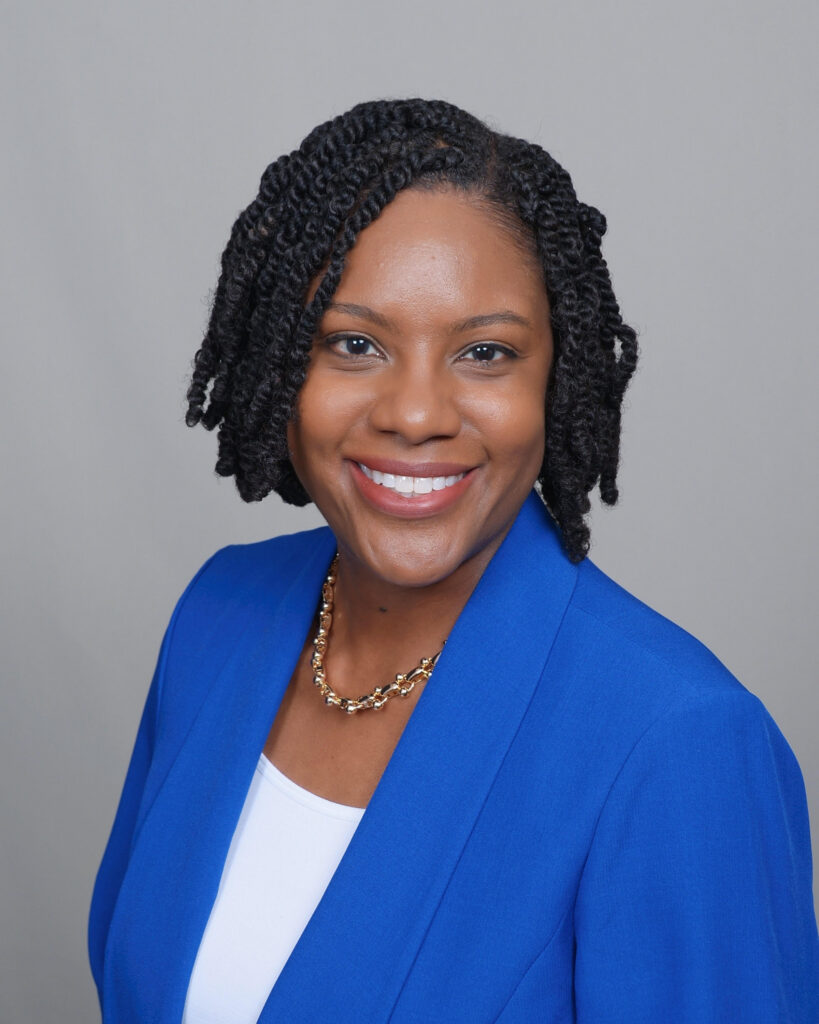
Dr. Nikeea Copeland Linder is an Associate Professor of Psychology. She earned a Ph.D. in Clinical Psychology and a Master of Public Health in Health Behavior and Health Education from the University of Michigan. She completed an NIMH-funded postdoctoral research fellowship at the University of Michigan and a research fellowship in the Department of Pediatrics at Johns Hopkins School of Medicine. Her research examines the impact of contextual stress on the mental health and health-risk behaviors of children and adolescents. She is particularly interested in individual, family, and cultural protective factors that decrease depression and anxiety and enhance adaptive coping among youth who have experienced high levels of stress. Her work also focuses on the development of evidence-based interventions designed to reduce stress and promote resilience. Dr. Linder is a co-developer and project team leader of the COPE Project, a training program at Kennedy Krieger Institute designed to deliver an evidence-based group mental health intervention to adolescents with autism spectrum disorder who have experienced stressful life events. She is passionate about training the next generation of mental health and public health leaders, practitioners and researchers.
Education
- Ph.D., Clinical Psychology, University of Michigan
- M.P.H., Health Behavior and Health Education, School of Public Health, University of Michigan
- M.A., Clinical Psychology, University of Michigan
- B.A., Psychology, University of Michigan
Research
Publications
- Davis, A., Copeland-Linder, N., Phuong, K., Belcher, H., & van Eck, K. (2024). Hospitalization and Mortality among Privately Insured Individuals with COVID-19 in the United States: The Role of Intellectual Disabilities and Neurogenetic Disorders. Journal of intellectual disability research :JIDR, 68(6), 573–584. https://doi.org/10.1111/jir.13116
- Davis, A., Van Eck, K., Copeland-Linder, N., Phuong, K., & Belcher, H. M. E. (2024). Hospitalization and Mortality for Insured Patients in the United States with COVID-19 with and without Autism Spectrum Disorder. Journal of autism and developmental disorders, 54(6), 2347–2354. https://doi.org/10.1007/s10803-023-05971-2
- Barbarin, O. A., Copeland-Linder, N., & Wagner, M. (2022). Can you See What We See? African American Parents' Views of the Strengths and Challenges of Children and Youth Living with Adversity. Prevention science:the official journal of the Society for Prevention Research, 25(1), 85–94. https://doi.org/10.1007/s11121-022-01469-y
- Slomine, B. S., & Copeland-Linder, N. (2021). Early-Life Adversity and Executive Functioning-Highlighting an Urgent Need for Identification, Prevention, and Intervention in Childhood. JAMA pediatrics, 175(11), e212517. https://doi.org/10.1001/jamapediatrics.2021.2517
- Barbarin, O., Hitti, A., & Copeland-Linder, N. (2019). Behavioral and emotional development of African American boys growing up in risky environments. Child Development Perspectives, 13(4), 215-220. https://doi.org/10.1111/cdep.12341
- Butler-Barnes, S.T., Martin, P.P., Hope, E.C., Copeland-Linder, N., Lawrence Scott, M. (2018). Religiosity and coping: Racial stigma and psychological well-being among African American girls. Journal of Religion and Health, 57 (5), 1980-1995. https://doi.org/10.1007/s10943-018-0644-9
- Copeland-Linder, N., Otite, E., Serico, J., Jamora, M., & Belcher, H. M. E. (2016). Neurobiology of child maltreatment and psychological trauma. In M.V. Johnson, H. P. Adams, & S. A. Fatemi (Eds). Neurobiology of Disease, Second Edition. (pp. 1269- 1274). Oxford University Press.
- Perry-Parrish, C., Copeland-Linder, N., Webb, L., Shields, A. H., & Sibinga, E. M. (2016). Improving self-regulation in adolescents: current evidence for the role of mindfulness-based cognitive therapy. Adolescent health, medicine and therapeutics, 7, 101–108. https://doi.org/10.2147/AHMT.S65820
- Copeland-Linder, N., Johnson, S., Haynie, D., Chung, S., & Cheng, T. L. (2012). Retaliatory attitudes and violent behavior among assault-injured youth. Journal of Adolescent Health, 50, 215-220. https://doi.org/10.1016/j.jadohealth.2011.04.005
- Copeland-Linder, N., Lambert, S. F., Chen, Y., & Ialongo, N. (2011). Contextual stress and health risk behaviors among African American adolescents. Journal of Youth and Adolescence, 40, 158-173. https://doi.org/10.1007/s10964-010-9520-y
- Murry, V. M., Berkel, C., Gaylord-Harden, N., Copeland-Linder, N., & Nation, M. (2011). Neighborhood poverty and adolescent development. Journal of Research on Adolescence: Special issue Decade Review, 21, 114-128. https://doi.org/10.1111/j.1532-7795.2010.00718.x
- Copeland-Linder, N., Lambert, S. F., & Ialongo, N. S. (2010). Community violence, protective factors, and adolescent mental health: A profile analysis. Journal of Clinical Child and Adolescent Psychology, 39, 176-186. doi: 10.1080/15374410903532601
Presentations
- Becker, J., Menon, D., Hutt-Brown, T., Copeland-Linder, N., & Van Eck, K. (May 2026). Overlapping and Interacting Symptoms of Autism and Trauma: Implications for Diagnosis, Treatment, and Prevention. Presented at the Society for Prevention Research Annual Meeting in Washington, DC.
- Menon, D., Van Eck, K., Copeland-Linder, N., Hutt-Brown, T., & Duvall, L. (May, 2024). COPE: CBITS over Telehealth Promotes Empowerment. A Novel Virtual Group Intervention and Training Model to Address Mental Health Disparities in Youth with Autism. Presented at the International Society of Autism Research (INSAR) in Melbourne, Australia.
- Menon, D., Van Eck, K., Copeland-Linder, N., Hutt-Brown, T., & Duvall L. (May, 2024). COPE: CBITS Over Telehealth Promotes Empowerment – Results of a pilot study of individuals with Autism. Presented at the International Child Neurology Congress (ICNC) in Cape Town, South Africa.
- Duvall, L., Kent, H., Menon, D., Copeland-Linder, N., Hutt-Brown, T., & Van Eck, K. (October, 2023). Adapting a Virtual, Group, CBT Intervention for Youth with ASD and Trauma Exposure: Results of a Pilot Study. Presented at the American Academy of Child and Adolescent Psychiatry in New York City, NY.
- Copeland-Linder, N., Hutt-Brown, T., Menon, D., Van Eck, K. (July, 2023). Addressing Stress and Trauma among Youth with Autism Spectrum Disorder: Development of the COPE Team. Presented at Grand Rounds at Kennedy Krieger Institute and Johns Hopkins School of Medicine in Baltimore, MD.
Professional Affiliations & Memberships
- Society for Prevention Research
- American Psychological Association